terça-feira, 23 de maio de 2017


domingo, 21 de maio de 2017
sábado, 20 de maio de 2017


terça-feira, 16 de maio de 2017
17 de Maio: Dia Internacional contra a Homofobia
 Este dia é celebrado desde o ano de 1990, data em que a Organização Mundial de Saúde (OMS) excluiu a homossexualidade como um transtorno mentalda classificação internacional de doenças. Desde então, o 17 de maio foi escolhido como símbolo de luta pela diversidade sexual, contra a violência e o preconceito.
Com este dia pretende criar-se uma consciência global para o fenômeno da homofobia e transfobia.
Por um mundo sem discriminação, sem violência, sem homofobia, lesbofobia, bifobia nem transfobia.


quarta-feira, 10 de maio de 2017
BRASIL: SUPREMO TRIBUNAL FEDERAL EQUIPARA HERANÇA DE UNIÃO ESTÁVEL HOMOSSEXUAL COM A DE CASAMENTO CIVIL.


Hoje, dia 10 de maio de 2017, o Supremo Tribunal Federal (STF) decidiu equiparar os direitos sucessórios de uma união estável homossexual com a de um casamento civil.
Assim, um indivíduo que mantinha relação homossexual em união estável com outro falecido terá direito à metade de seus bens, como no casamento, e não apenas a um terço, como previsto no Código Civil.
No julgamento, os ministros analisaram o caso de um homem que viveu por mais de 40 anos com seu companheiro e disputava a parcela da herança com a mãe do falecido.
Por 6 votos a 2, a maioria dos ministros entendeu que, apesar de serem institutos distintos, a união estável e o casamento devem ter o mesmo tratamento em relação à herança.
Votaram nesse sentido os ministros Luís Roberto Barroso, Edson Fachin, Alexandre de Moraes, Rosa Weber, Luiz Fux e Cármen Lúcia.

sexta-feira, 5 de maio de 2017


segunda-feira, 1 de maio de 2017
CONTRA A PRECARIEDADE NO MUNDO DO TRABALHO, PELO TRABALHO DIGNO.
POR UM TRABALHO DIGNO, POR UMA VIDA DIGNA. VIVA OS TRABALHADORES DO MUNDO.

segunda-feira, 24 de abril de 2017
domingo, 23 de abril de 2017
MSM Remain Hardest-Hit By Syphilis
MSM are experiencing rates of syphilis not seen since before the HIV epidemic. In 2015, MSM made up the majority of primary and secondary (P&S) syphilis cases, and data suggest that an average of half of MSM who have syphilis are infected with HIV.
The only way to avoid getting syphilis or other STDs is to not have anal, oral, or vaginal sex.

Get tested – it’s the only way to know if you have syphilis.
CDC recommends all sexually active gay and bisexual men be tested for specific STDs, including syphilis, at least once a year and more frequently for those who have multiple or anonymous partners (i.e., at 3-to-6 month intervals).
Talk about it! Silence helps to fuel the spread of STDs.

The only way to avoid getting syphilis or other STDs is to not have anal, oral, or vaginal sex.
If you are sexually active, here are some ways to lower your chances of getting syphilis:
- Be in a long-term mutually monogamous relationship with a partner who has been tested and has negative STD test results.
- Reduce your number of sex partners; however, it’s still important that you and your partner get tested, and that you share your test results with one another.
- Use latex condoms the right way every time you have sex. Condoms prevent the spread of syphilis by preventing contact with a sore. Sometimes sores can occur in areas not covered by a condom, so you could still get syphilis from contact with these sores, even if you are wearing a condom.

Get tested – it’s the only way to know if you have syphilis.
CDC recommends all sexually active gay and bisexual men be tested for specific STDs, including syphilis, at least once a year and more frequently for those who have multiple or anonymous partners (i.e., at 3-to-6 month intervals).
Talk about it! Silence helps to fuel the spread of STDs.
segunda-feira, 17 de abril de 2017
NATIONAL TRANSGENDER HIV TESTING DAY, APRIL 18.
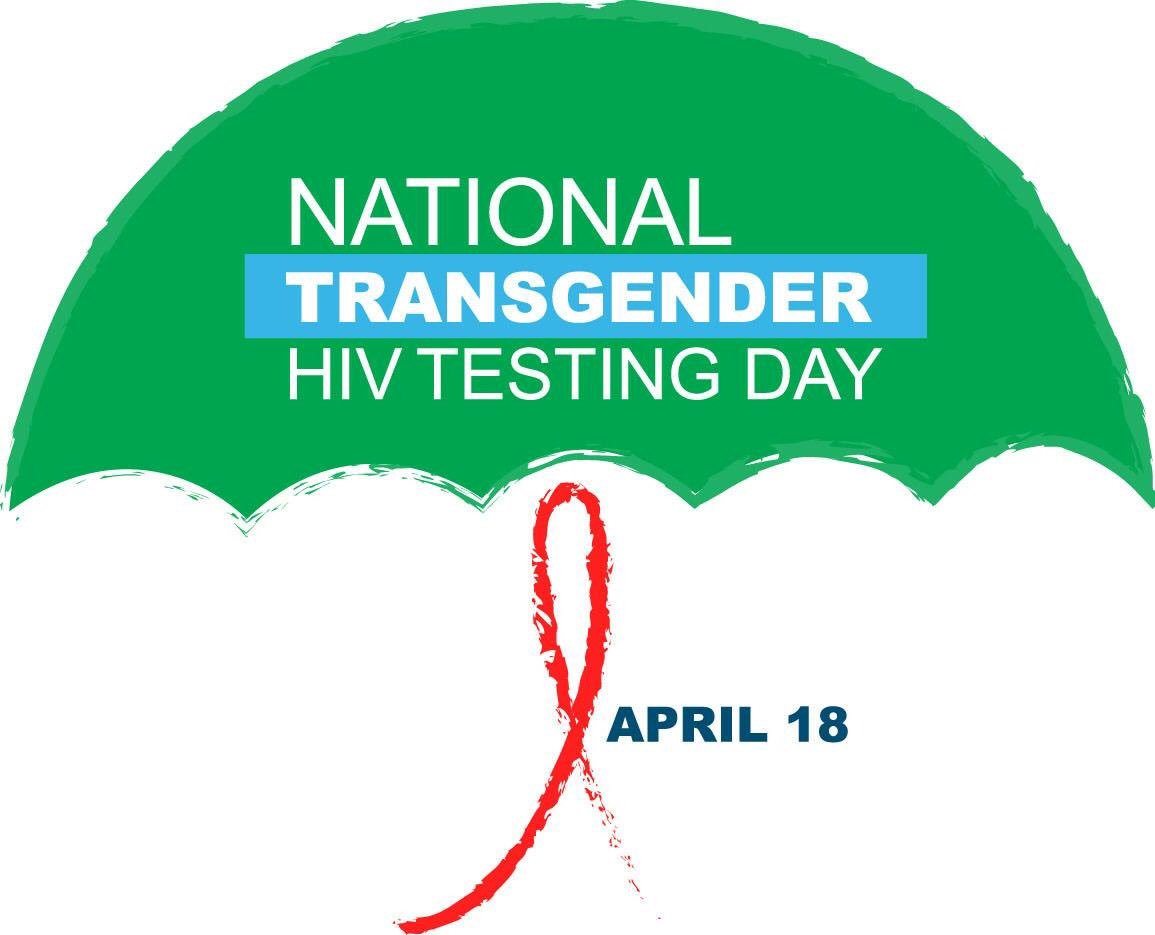
This is a day to promote HIV testing, prevention, and treatment for transgender people and encourage local testing events that serve transgender communities.
Ensuring that HIV testing, prevention, and treatment initiatives reach transgender people is important,.
Ensuring that HIV testing, prevention, and treatment initiatives reach transgender people is important,.
As more than 2,300 HIV infections were diagnosed among transgender people from 2009 to 2014.
Of these, 52% were among blacks/African Americans, and 44% were among people living in the South. In particular, transgender women are at high risk for HIV, accounting for 84% of these diagnoses.
An estimated 22% of transgender women in the United States are living with HIV, and the percentage is much higher (an estimated 56%) among black/African American transgender women. Though data are limited, transgender men who have sex with men may also be at high risk for HIV.
quinta-feira, 13 de abril de 2017
Sexual Orientation and Gender Identity Definitions

Sexual orientation
An inherent or immutable enduring emotional, romantic or sexual attraction to other people.
Gender identity
One's innermost concept of self as male, female, a blend of both or neither – how individuals perceive themselves and what they call themselves. One's gender identity can be the same or different from their sex assigned at birth.
Gender expression
External appearance of one's gender identity, usually expressed through behavior, clothing, haircut or voice, and which may or may not conform to socially defined behaviors and characteristics typically associated with being either masculine or feminine.

Transgender
An umbrella term for people whose gender identity and/or expression is different from cultural expectations based on the sex they were assigned at birth. Being transgender does not imply any specific sexual orientation. Therefore, transgender people may identify as straight, gay, lesbian, bisexual, etc.
Gender transition
The process by which some people strive to more closely align their internal knowledge of gender with its outward appearance. Some people socially transition, whereby they might begin dressing, using names and pronouns and/or be socially recognized as another gender. Others undergo physical transitions in which they modify their bodies through medical interventions.
Gender dysphoria
Clinically significant distress caused when a person's assigned birth gender is not the same as the one with which they identify. According to the American Psychiatric Association's Diagnostic and Statistical Manual of Mental Disorders (DSM), the term – which replaces Gender Identity Disorder – "is intended to better characterize the experiences of affected children, adolescents, and adults."

quarta-feira, 12 de abril de 2017
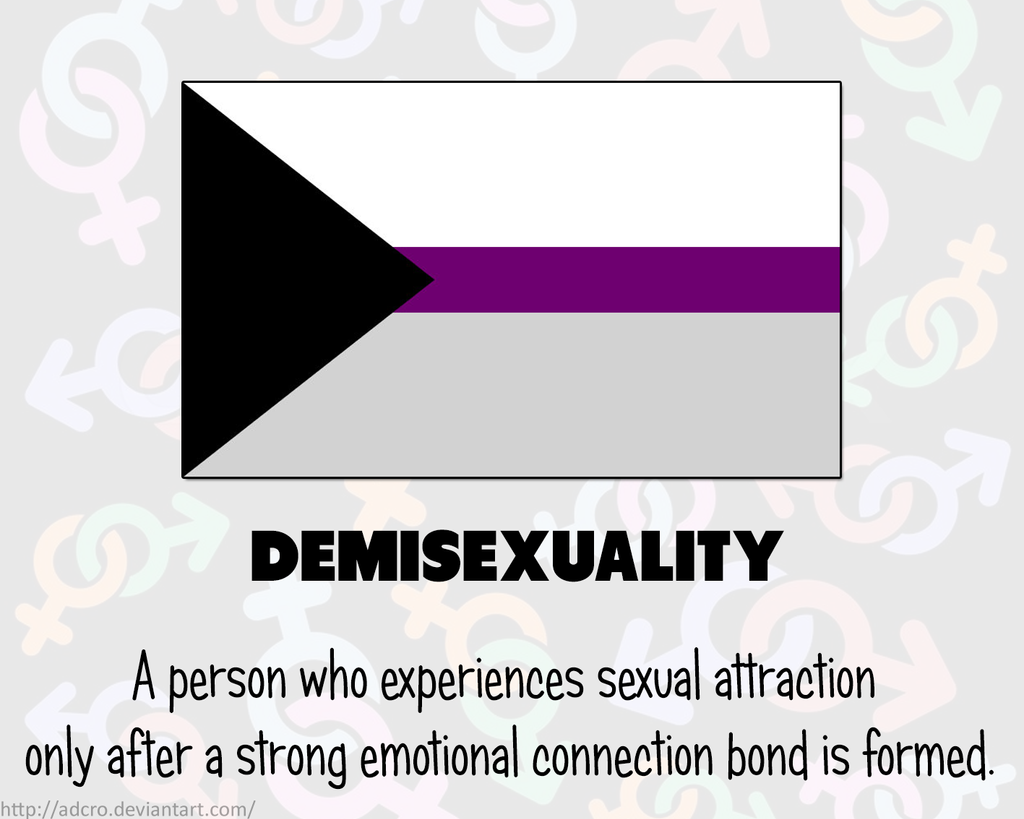
What is Demisexuality?
According to asexuality.org:
A demisexual is a person who does not experience sexual attraction unless they form a strong emotional connection with someone. It's more commonly seen in but by no means confined to romantic relationships. The term demisexual comes from the orientation being "halfway between" sexual and asexual. Nevertheless, this term does not mean that demisexuals have an incomplete or half-sexuality, nor does it mean that sexual attraction without emotional connection is required for a complete sexuality. In general, demisexuals are not sexually attracted to anyone of any gender; however, when a demisexual is emotionally connected to someone else (whether the feelings are romantic love or deep friendship), the demisexual experiences sexual attraction and desire, but only towards the specific partner or partners.
When describing demisexuality as an orientation to sexuals, sexuals often mistake it as an admirable choice rather than an innate orientation. Demisexuals are not choosing to abstain; they simply lack sexual attraction until a close relationship is formed.
According to one hypothetical model, a person who identifies as a demisexual does not experience primary sexual attraction but does experience secondary sexual attraction. In this model, primary sexual attraction is based on outward qualities such as a person's looks, clothes, or personality while secondary sexual attraction is attraction stemming from a connection, usually romantic, or from status or how closely the person is in relationship to the other.
segunda-feira, 10 de abril de 2017
Governo da Chechênia instala campo de concentração para homossexuais

Autoridades chechenas estariam usando campos de concentração para prender e torturar homens gays. De acordo com denúncias de grupos defensores dos direitos humanos, mais de 100 homens gays foram detidos “em conexão a sua orientação sexual não-tradicional, ou suspeitas disso”. Uma dessas prisões estaria num quartel na cidade de Argun.
De acordo com o jornal The New York Times, gays que vivem na região estão apagando seus perfis em redes sociais, pois policiais estão utilizando perfis falsos para convidá-los para encontros e então prendê-los.
Com uma população predominantemente muçulmana, a Chechênia vive sob o regime do presidente, Razman Kayrov, aliado de Vladimir Putin, que supostamente ordenou a perseguição a LGBTs.

BLACK LIVES MATTER: 5 Reasons Why Black People Are More Affected by HIV.

Today, African-Americans account for only 13 percent of the population but 43 percent of new HIV infections, the majority of those among gay and bisexual men and transgender women.
Why do black people carry the burden of this disease, especially when it didn't start out that way? It's not that African-Americans engage in riskier behavior; in fact, studies have shown they use condoms more and drugs less than their white counterparts. There's actually a confluence of factors that make HIV significantly more difficult to face and overcome in black communities.
Institutionalized Racism
HIV impacts black populations disproportionately because the majority don’t have adequate access to the tools to prevent and treat the disease. Through policies and procedures, institutionalized racism creates a system that implicitly and sometimes explicitly disadvantages people of color.
Poverty
The 2012 US census reported that 28.1 percent of black people are living in poverty compared to the national average of 15.9 percent.The greater numbers of black people living in poverty are, in part, a result of the limited opportunities for upward mobility afforded to them. Often living in poverty means lack of education, lack of access to healthcare, increased risk of substance use and homelessness, and increased likelihood of engaging in sex work as a source of income. All are factors that can increase the risk of acquiring HIV. For those living in poverty who become HIV-positive, priorities do not change. Their concerns on a day-to-day basis are finding and maintaining income, keeping food on the table, and ensuring a place to sleep at night.
Homophobia in the Church
According to the U.S. Religious Landscape Survey conducted in 2007, 87 percent of black people are affiliated with a religion. In the face of racial discrimination and hatred, the black church has always provided a sense of togetherness and belonging. However, when a black person comes out as LGBT, many don’t have that same support. Unfortunately black people in the church still make up a large portion of anti-gay America. Traditionally the black church organizes and rallies when the community is faced with a crisis. However, the response to the HIV epidemic has been slow to nonexistent. The reality is black, gay and bisexual men and transgender women are in a state of emergency when it comes to HIV/AIDS, yet they don’t have the full support of the black community.
Limited Sexual Networks
Black people remain the minority group that has relationships outside of their race the least at 19 percent. This means that the majority of black people have sexual partners who are also black. And given the smaller population size, once the black community was exposed to HIV it spread quicker and the negative impact was and continues to be greater. This means that black people who choose other black partners are more likely to come in contact with someone who is HIV-positive than other people who date within their race. This is especially true in LGBT communities as the CDC has reported that more than 1 in 4 black gay and bisexual men and 1 in 2 black transgender women are testing positive for HIV, compared to .06 percent of the general population.
The Exaggeration of the "Down Low" Brother
The "down low" is a concept rooted in homophobia that leads to misguided assumptions about HIV in black communities. Studies have shown that the majority of black men who have sex with men do identify as gay or bisexual, and those who don’t are less likely to be HIV positive, have multiple male sexual partners and have engaged in unprotected anal intercourse in the past 6 months. The idea of large numbers of black men being on the down low does a disservice to the community as a whole. It implies that being gay or bisexual is something to be ashamed of and it assumes that if you are an HIV-positive man who identifies as heterosexual you must be lying about who your sexual partners are. If you are an HIV-positive woman then you must have had sex with a man who wasn’t honest about his sexual partners, which eliminates the possibility of bisexuality and makes the woman a victim and void of the ability to empower herself and require protection during sex.
Modified from Ashley Innes


Assinar:
Postagens (Atom)